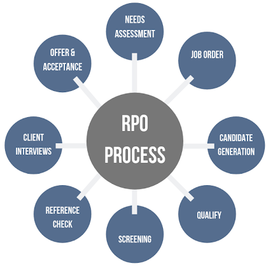
What is an RPO provider?
An RPO provider acts as an in-house recruiter for a business, providing efficiency and flexibility to the recruitment process. It relieves employers and HR professionals of administrative burdens and delivers a seamless, high-touch experience for job candidates.
How does RPO work?
A comprehensive RPO partnership offers daily administration and big-picture strategic guidance. These services are underpinned by a flexible applicant tracking system (ATS).
How is RPO different from recruiting?
Recruiting is usually ad hoc. RPO is a long-term partnership that aims to optimize recruitment strategies and build pipelines aligned with business goals.
What are the benefits of outsourcing recruitment?
Benefits include reduced time-to-hire, access to top talent, improved hiring quality, and reduced recruitment costs through process optimization.
RPO types
RPO solutions can include end-to-end RPO, project-based RPO, and on-demand RPO, depending on company needs.
What are the services covered under RPO?
Services include job marketing, talent sourcing, interview scheduling, employer branding, background checks, and onboarding support.
What is the difference between RPO and BPO?
RPO focuses solely on recruitment, while BPO (Business Process Outsourcing) may involve outsourcing a variety of business functions such as finance, IT, or customer support.
What do RPO companies do?
RPO companies streamline hiring, manage job postings, screen candidates, and implement recruiting tech to enhance recruitment outcomes.
What kind of RPO models are there?
Models include fully outsourced recruitment, blended models with internal HR, and function-specific models for tech or executive hiring.
What is the difference between Human Resource Outsourcing (HRO) and RPO?
HRO includes all HR functions such as payroll and compliance, while RPO is solely focused on recruitment functions.